

Heritage Exhibitors
Toby Kroll
 Toby Kroll is a 3rd generation blacksmith/farrier. His job as a boy was to help his father and grandfather with their daily work. Some of Kroll’s earliest memories of farriership is helping to keep the horse comfortable and fly free during the shoeing process. He was an active, full-time farrier for more than 40 years, working for and learning techniques from Bruce Daniels of Mullica Hill, NJ and Donald Streeter of Vineland, NJ.
Stephen Nutall
 Always trying to improve his technique, Apprentice Blacksmith Stephen Nuttall is based in Southern Ocean County and is a 2017 Folk Arts grant recipient from the New Jersey State Council of the Arts. Stephen began his apprenticeship in 2015 under Master Blacksmith Toby Kroll at Basto Village and is forging a deeper relationship with his community by recreating historic items necessary for the Baymen’s life on the Jersey Shore. Stephen is working with the Tuckerton Seaport to install a new Blacksmith ship in Tuckerton, NJ where classes and full-time exhibitions will be presented during special occasions.
Marking Environmental Losses:
Department of Landscape Architecture
Praxis Design Studio
Instructor: Anita Bakshi
 The designers in this Rutgers Department of Landscape Architecture studio, have spent the last few months exploring how to mark environmental losses. In the Heritage Area we will present drawings and models from the design studio. In particular, we have focused on the Ringwood Mines Superfund site in Ringwood, New Jersey, which is also the ancestral home of a Ramapough community. Through drawings and models we have visualized the history of this site, illustrating this ongoing environmental justice issue in our state. We have documented changes to the landscape through nuanced representations of the cultural and environmental history of this community, and designed memorial projects that focus on representing the environmental losses at this site. Please stop by our table to learn more.
Ringwood has been the site of iron mines since the mid-1700s, and is also the ancestral home of the Ramapough Lunaape Nation. The community living in upper Ringwood has experienced significant environmental degradation, radically increased rates of cancer and illness, and the loss of their raditional living practices and connection to the land after it was used as a dumping ground by Ford Motors in the 1960s and 1970s. Following significant activism by the community, this site was declared a Superfund Site. Although the EPA claimed that the site had been cleaned up, significant remaining contamination was found, and the Ramapough had to again take action to bring attention to the issue. Ringwood was again declared a Superfund site, yet contaminated material remains on the site to this day.
TCHIN
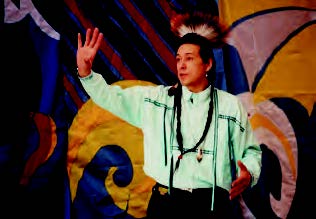 TCHIN (pronounced ‘chin) is a nationally known, multi-award winning, multi-talented artist. He was born in Norfolk, Virginia and lived in rural Virginia and Rhode Island where he received his early schooling. He attended the Institute of American Indian Arts in Santa Fe, New Mexico and graduated from Rhode Island School of Design with a Bachelor of Fine Arts Degree. He is an accomplished metalsmith, author, flutemaker, educator, lecturer, folklorist, musician, entertainer and clothes maker. While working in his studio, Tchin enjoys listening to audiobooks. In his free time, he likes to watch “This Old House” and build new things. Tchin loves tending the land and cooks masterful meals with his wife Woo as sous chef. He has four wonderful daughters and eight beautiful grandchildren.
Elizabeth Baumgardt
 Elizabeth Baumgardt – more commonly known as Bette – and her family has always done several kinds of needlework, so it was a natural for Bette to fall in love with the beauty of Hardanger Embroidery when a Norwegian friend introduced her to the work many years ago. She was teaching a class at Noreg Lodge, Sons of Norway and when she could no longer do it, Bette took over the class. She finds it very rewarding to see this lovely traditional work being kept alive for future generations to enjoy. Her work has been displayed at the New Jersey’s ScanFest for several years and her designs – most of which are original – have won ribbons in several competitions. Bette is currently an instructor in Haranger for the cultural program at Noreg Lodge and would love to extend a welcome to others who would like to enjoy this lovely work.
Natalie Warchola
 Natalie Warchola is proprietor and lead event floral designer at Warchola’s Holiday Design where she teaches the art of Pysanky. Warchola learned how to create Pysanky as a child, using the traditional wax resist method. As an adult, she perfected her skills as a Pysankar and went on to teach this art by invitation at libraries, schools, and churches. Today, Warchola regularly holds classes and workshops in her studio for those who come to learn how to create Pysanky.
Mary May
 Based in Forked River, NJ, Mary May is a specialist in white oak basketry and other basket-making traditions of South Jersey who has been making baskets for over 20 years. Ms. May’s baskets are both strong enough to be used for their historical purposes (carrying berries, fish, eels, etc.) and to be put on display, as they have been at Tuckerton Seaport and the New Jersey State Museum. Ms. May has also demonstrated her craft at New Jersey Forestry Interpretive Center and the Long Beach Island Foundation of the Arts and Sciences, as well as on television programs such as Ebru TV’s “Blank Canvas.” In an effort to preserve and promote white oak and other traditional forms of basket-making, Ms. May teaches workshops regularly at the Jersey Shore Folklife Center, where she serves on the advisory board. Her extensive research and mastery of her craft landed her a 2016 Folk Arts Apprenticeship Grant and title of Master Artist of White Oak Basketry from the New Jersey State Council on the Arts.
Heritage Spotlight
The 44th Annual New Jersey Folk Festival celebrates the heritage of Native Americans in New Jersey with performance and crafts on Saturday, April 28, 2018. The festival features the three well-established Native tribes located in New Jersey: the Nanticoke Lenni-Lenape Tribal Nation, the Powhatan Renape Nation, and the Ramapough Lunaape Nation. The Heritage Area of the Folk Festival will honor the unique cultures of indigenous people who have endured and maintained their traditions throughout centuries of colonization.
Artists demonstrating traditional Native arts include Tchin (Blackfoot and Narragansett), a nationally known, multi-award winning, multi-talented artist who will be demonstrating metalsmithing. He is an accomplished author, flutemaker, educator, lecturer, folklorist, musician, entertainer and clothes maker. He was born in Norfolk, Virginia and lived in rural Virginia and Rhode Island where he received his early schooling. He attended the Institute of American Indian Arts in Santa Fe, New Mexico and graduated from Rhode Island School of Design with a Bachelor of Fine Arts Degree.
Anita Bakshi and students from the Rutgers University Department of Landscape Architecture have spent the last few months exploring how to mark environmental losses. In the Heritage Area they will present drawings and models from the design studio. Through drawings and models they have visualized the history of the Ramapough Lunaape Nation in their homeland of present-day Ringwood, New Jersey, illustrating this ongoing environmental justice issue in our state. The Ramapough community has experienced significant environmental degradation, radically increased rates of cancer and illness, and loss of their traditional living practices and connection to the land after Ringwood was used as a dumping ground by Ford Motors in the 1960s and 1970s. Following significant activism by the community, this site was declared a Superfund Site, but despite multiple EPA cleanups, contaminated material remains on the site to this day. Today a new environmental threat, in the form of the Pilgrim Pipeline, is on the horizon. Working with the Ramapough community, Bakshi’s class has developed memorial projects that focus on representing Ramapough land stewardship, ongoing environmental activism, and intergenerational knowledge about the landscape.
In addition to the Native heritage of New Jersey, the Heritage Area will celebrate the arts and crafts of the state’s diverse ethnic, religious, and folk traditions. Demonstrators include master blacksmith Toby Kroll and apprentice blacksmith Stephen Nuttall, who will participate in the Heritage Area in addition to being the 2018 Artists in Residence for the Festival. Toby Kroll is a 3rd generation blacksmith/farrier. His job as a boy was to help his father and grandfather with their daily work. He was an active, full-time farrier for more than 40 years, working for and learning techniques from Bruce Daniels of Mullica Hill, NJ and Donald Streeter of Vineland NJ. Apprentice Blacksmith Stephen Nuttall is based in Southern Ocean County and is a 2017 Folk Arts grant recipient from the New Jersey State Council of the Arts. Stephen began his apprenticeship in 2015 under Kroll at Basto Village and is forging a deeper relationship with his community by recreating historic items necessary for the Baymen’s life on the Jersey Shore. Stephen is working with the Tuckerton Seaport to install a new Blacksmith ship in Tuckerton, NJ where classes and full-time exhibitions will be presented during special occasions.
Elizabeth “Bette” Baumgardt will be demonstrating Norwegian Hardanger Embroidery. Her family has always done several kinds of needlework, so it was a natural for Bette to fall in love with the beauty of Hardanger Embroidery when a Norwegian friend introduced her to the work many years ago. Bette finds it very rewarding to see this lovely traditional work being kept alive for future generations to enjoy. Her work has been displayed at the New Jersey’s ScanFest for several years and her designs – most of which are original – have won ribbons in several competitions.
Natalie Warchola is proprietor and lead event floral designer at Warchola’s Holiday Design where she teaches Ukranian Easter egg art, Pysanky. Warchola learned how to create Pysanky as a child, using the traditional wax resist method. As an adult, she perfected her skills as a Pysankar and went on to teach this art by invitation at libraries, schools, and churches. Today, Warchola regularly holds classes and workshops in her studio for those who come to learn how to create Pysanky.
Mary May is a specialist in white oak basketry and other basket-making traditions of South Jersey who has been making baskets for over 20 years. Mary’s baskets are both strong enough to be used for their historical purposes (carrying berries, fish, eels, etc.) and to be put on display, as they have been at Tuckerton Seaport and the New Jersey State Museum. Ms. May has also demonstrated her craft at New Jersey Forestry Interpretive Center and the Long Beach Island Foundation of the Arts and Sciences, as well as on television programs such as Ebru TV’s “Blank Canvas.” In an effort to preserve and promote white oak and other traditional forms of basket-making, Mary teaches workshops regularly at the Jersey Shore Folklife Center, where she serves on the advisory board. Her extensive research and mastery of her craft landed her a 2016 Folk Arts Apprenticeship Grant and title of
Master Artist of White Oak Basketry from the New Jersey State Council on the Arts.
With an array of Native traditions on display as well as arts and crafts from other cultures, the Heritage Area will offer an exciting and educational way for visitors to experience New Jersey’s unique history and traditions.